– Children learn best when educational math toys transform even complex concepts into practical, hands-on experiences.
– Instead of merely rote-memorizing numbers, children can see, touch, and interact with them directly.
– This enhances children’s comprehension and retention abilities.
– When children solve problems through play, it inspires them to better understand complex concepts later in life.
2) What are the Benefits of Educational Toys for Children?
1. Enhances Problem-Solving Skills:
– Math toys often feature puzzles, counting exercises, or logical thinking activities.
– These help foster problem-solving skills in children.
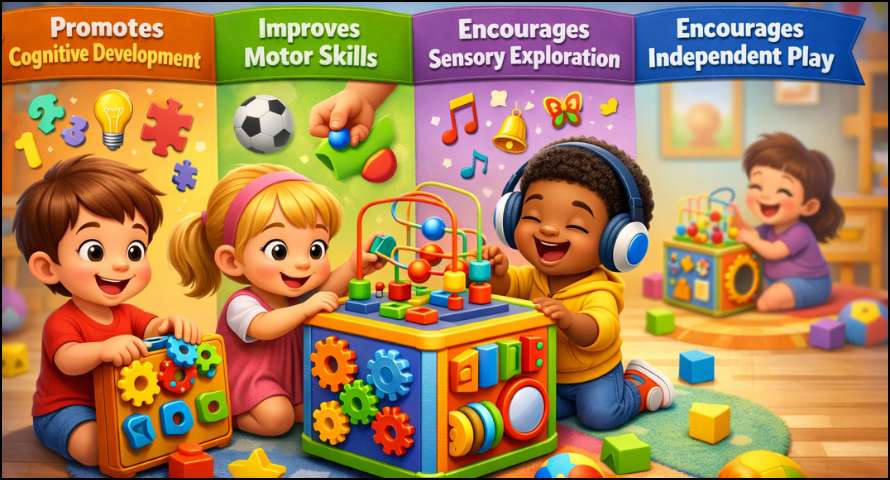
2. Promotes Cognitive Development:
– Regular engagement strengthens concentration and logical reasoning abilities.
3. Boosts Practical Learning:
– Children learn more effectively through the experiences provided by math toys; they learn concepts such as addition, subtraction, and patterns by physically manipulating objects with their hands.
4. Strengthens the Foundation of Mathematics:
– It lays the groundwork for introducing children to mathematics at an early age. Educational toys make it easier to grasp fundamental concepts like numbers and shapes.

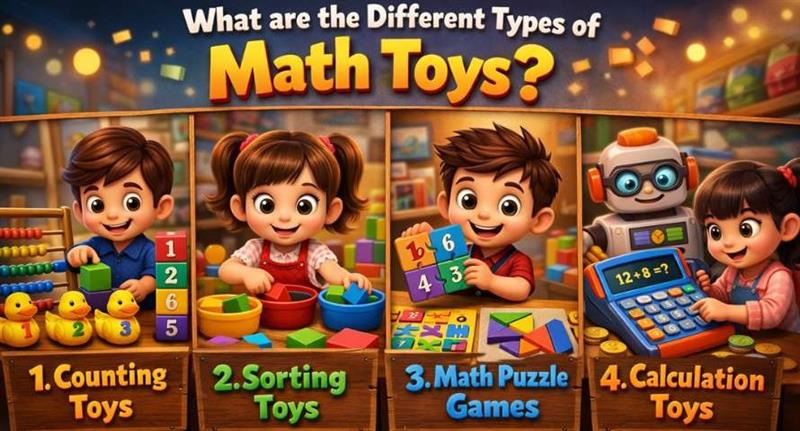
3) What are the Different Types of Math Toys?
– 1. Counting Toys:
– Using items like number blocks or beads, children learn to count and recognize the correct numerical values.
2. Sorting Toys:
– These help children understand relationships related to images, sizes, and spatial positioning.
3. Math Puzzle Games:
– These make learning through number puzzles and logic games a fun and interactive experience.
4. Calculation Toys:
– These assist children in learning basic arithmetic operations: addition, subtraction, multiplication, and division.
4) How to Choose Math Toys?
When selecting toys for children, keep the following points in mind:
– Educational Value :: Choose toys that focus on teaching counting, problem-solving, or logic.
– Safety :: Select toys that are not made from toxic materials.
– Colorful Toys :: Look for bright colors and interactive features that can sustain a child’s interest.
– Quality :: High-quality toys are more durable and last longer.
5) Tips for Parents?
– Parents should actively participate in their child’s learning process. Play together with your children, ask them questions, and encourage their curiosity.