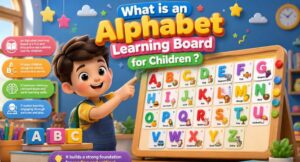
– An alphabet learning board is an educational toy designed to help children—especially toddlers—recognize the letters of the alphabet through play-based learning.
– These boards are typically made from wood, foam, or non-toxic plastic, and feature colorful letters that children can touch, move, and arrange.
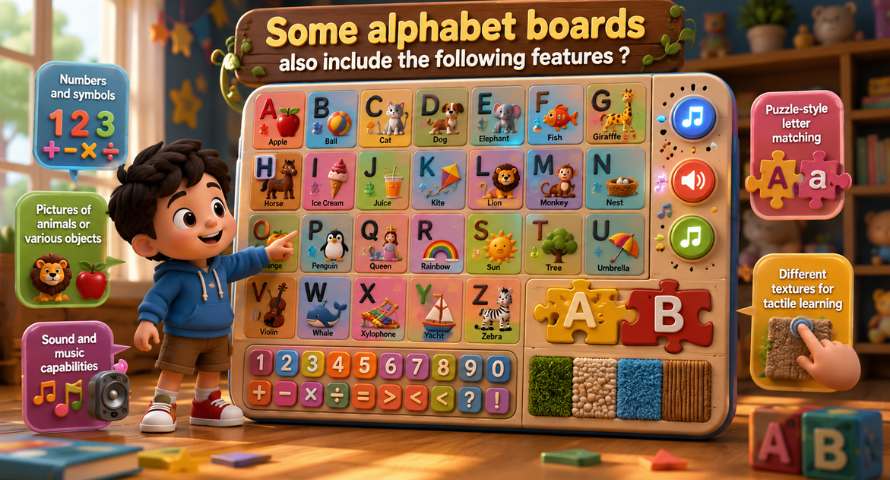
#Some alphabet boards also include the following features
– Numbers and symbols
– Pictures of animals or various objects
– Sound and music capabilities
– Puzzle-style letter matching
– Different textures for tactile learning

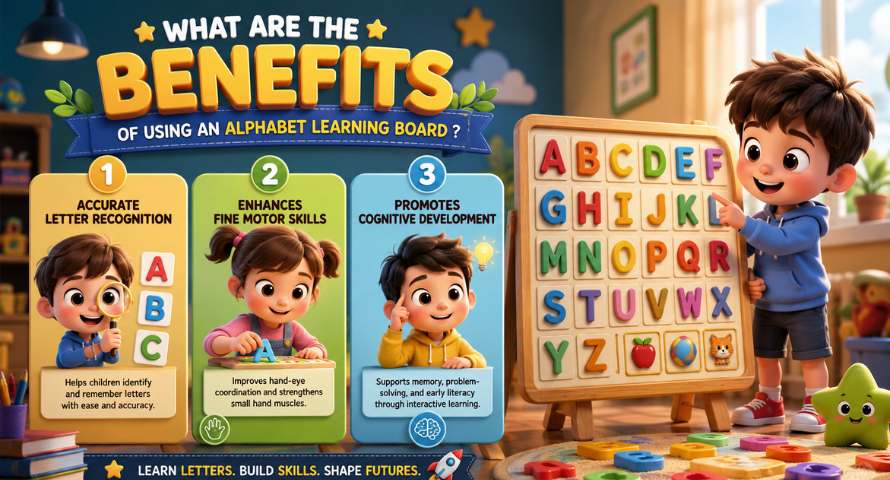
2) What are the Benefits of Using an Alphabet Learning Board
#1. Accurate Letter Recognition
– Alphabet boards introduce children to the letters from A to Z in a simple and engaging manner.
– Through repetition, children learn to recognize letters more quickly.
#2. Enhances Fine Motor Skills
– The act of picking up and placing letters improves hand-eye coordination.
#3. Promotes Cognitive Development
– Alphabet boards stimulate problem-solving and logical thinking, while also helping children understand patterns and relationships.
3) Why Choose a Wooden Alphabet Learning Board
– They are particularly popular among parents because they are durable, eco-friendly, and safe for children.
– Wooden boards often feature smooth edges and utilize non-toxic paints, making them ideal for young children.
#The benefits of wooden alphabet boards include
– Long-lasting quality
– Safe and child-friendly materials
– Eco-friendly design
– An attractive, colorful appearance
These boards are perfect for toddlers and preschool-aged children.
4) How to Choose a Good Alphabet Learning Board for Infants
#Safe Materials
– Always choose products that are BPA-free, free from toxic elements, and feature a smooth surface.
#Age-Appropriate Design
– For young infants, larger pieces are safer.
#Interactive Features
– Boards featuring music and puzzles can make the learning process more fun and engaging.
#Sturdy and Durable
– Ensures that the board can be used for a long period.
5) Tips for Teaching Infants Using an Alphabet Board
– Start slowly, introducing just a few letters at a time.
– Regularly repeat the sounds of the letters.
– Incorporate songs while playing.
– Encourage the infants to touch and identify the letters.
– Offer praise to boost the children’s confidence.