Nowadays, parents look for toys that offer both entertainment and education.

– Educational balance toys are among the best options because they combine fun with skill development.

– These toys encourage children to think, balance, and solve problems while playing.

– Balance toys come in various shapes and designs, such as stacking rocks, balancing blocks, animal figures, and colorful wooden pieces.

– They challenge children to carefully place the pieces without toppling the structure.

– This simple activity helps improve essential developmental skills that contribute to a child’s overall growth.

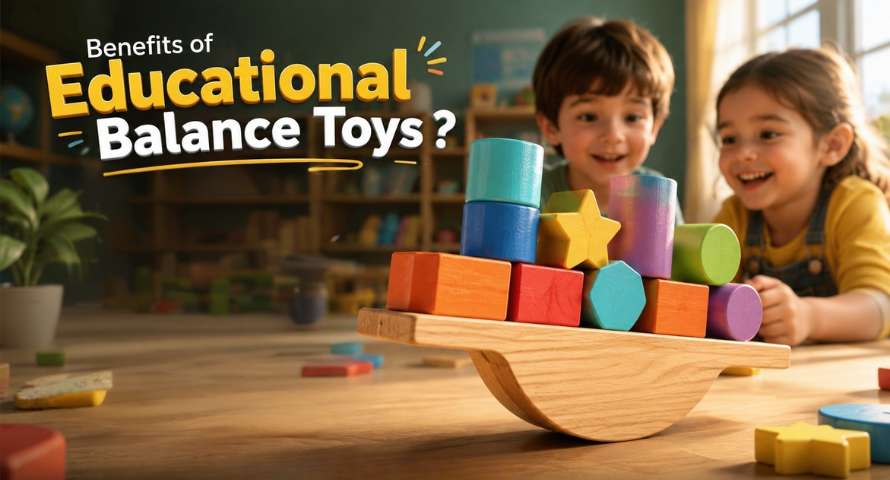
2) Benefits of Educational Balance Toys?

#1. Improves fine motor skills.

– When children pick up, hold, and place balancing pieces, the small muscles in their hands and fingers are strengthened.

– These movements help improve hand-eye coordination and fine motor skills.

#2. Enhances problem-solving abilities.

– With balance toys, children have to figure out where to place each piece.

– They learn through trial and error, discovering which placements create stability and which cause the structure to collapse.

– This process fosters logical thinking and problem-solving skills.

#3. Promotes patience and concentration.

– Building a balanced structure requires focus and patience.

– Children must pay attention to details and carefully plan their moves.

#4. Supports cognitive development.

– Educational balance toys stimulate the brain by fostering spatial awareness, reasoning, and strategic thinking. – While playing, children naturally learn concepts related to shape, size, weight distribution, and balance.


3) Why do parents prefer educational balance toys?

– Many parents prefer balance toys because they foster learning while providing screen-free entertainment.

– Balance toys can be enjoyed alone or with friends and family. Group play helps develop communication skills, teamwork, and social interaction among children.

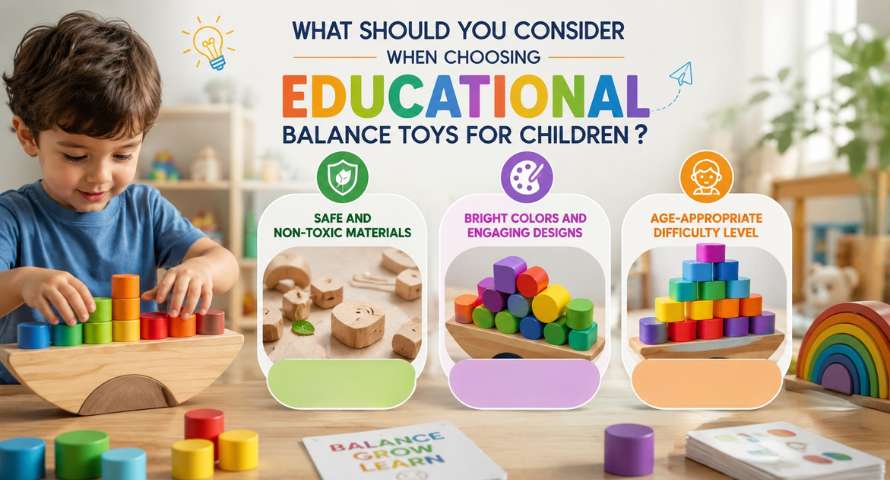
4) What should you consider when choosing educational balance toys for children?

– Safe and non-toxic materials: Ensure the toy is made from materials that are safe for children.

– Sturdy construction: High-quality wood or durable plastic pieces ensure longevity.

– Bright colors and engaging designs.

– Age-appropriate difficulty level.

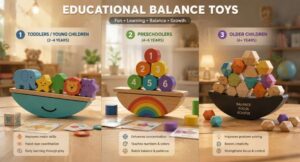
5) Educational balance toys for different age groups?

1) Toddlers/Young Children (2–4 years)

– Simple balancing toys with large, easy-to-grasp pieces are ideal for younger children.

– These toys help develop basic coordination and motor skills.

2) Preschoolers (4–6 years)

– Preschoolers enjoy slightly more challenging balancing games that foster creativity and problem-solving skills.

– They can experiment by creating various structures.

3) Older Children (6+ years)

– Older children can handle complex balancing challenges that require strategic thinking and patience.

Select the fields to be shown. Others will be hidden. Drag and drop to rearrange the order.
  • Image
  • SKU
  • Rating
  • Price
  • Stock
  • Availability
  • Add to cart
  • Description
  • Content
  • Weight
  • Dimensions
  • Additional information
Click outside to hide the comparison bar
Compare