– Nowadays, games have become a tool for parents and teachers to teach children in an engaging way. Among these, alphabet puzzle games are an effective and fun way to help children develop literacy skills.
– These games not only make learning the alphabet fun but also enhance critical thinking and problem-solving.
2) Why are alphabet puzzle games so important?
– Interactive alphabet puzzles children learn correct alphabet.
– Children quickly recognize letters.
– They understand the pronunciation of letters.
– They improve their thinking skills.
– Puzzles also improve children’s hand-eye coordination.
Children learn letters while having fun, which helps them memorize the alphabet.
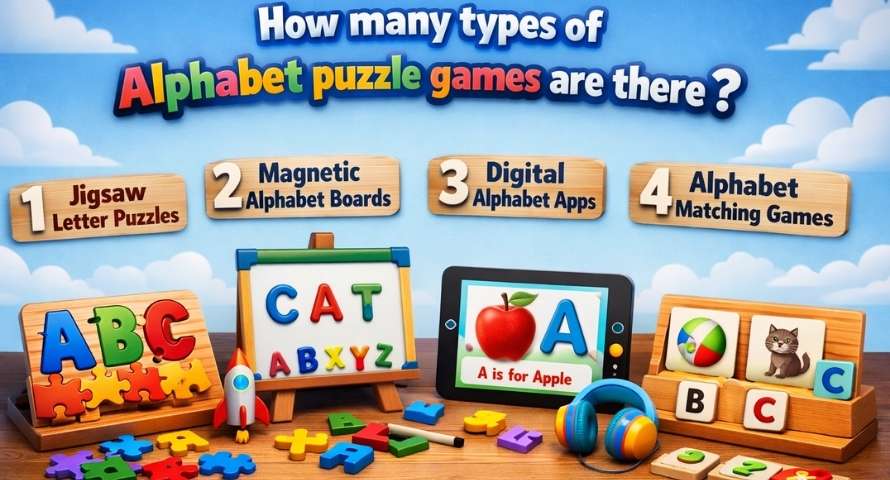
3) How many types of alphabet puzzle games are there?
Alphabet puzzle games for kids are available both offline and online. Some popular ones are:
1. Jigsaw Letter Puzzles
– Children quickly match letters to images (e.g., “A” for “Apple”).
2. Magnetic Alphabet Boards
– Children form words by placing magnetic letters on the board, which strengthens spelling skills.
3. Digital Alphabet Apps
– Applications offer animations and quizzes, making learning letters interesting and fun.
4. Alphabet Matching Games
– Children match letters to images, which improves their cognitive skills.

4) What benefits do alphabet puzzle games offer children?
– Language Improvement: Children learn to associate letters with sounds and form words, which improves reading and writing.
– Cognitive Abilities Enhancement: Solving puzzles improves problem-solving skills and memory.
– Matching letters to images and form words. It also promotes literacy.
– Children can play alphabet puzzle games alone, which builds confidence.
– These benefits make alphabet puzzles an essential tool for parents and educators who want to advance children’s literacy.
5) What are some tips for parents?
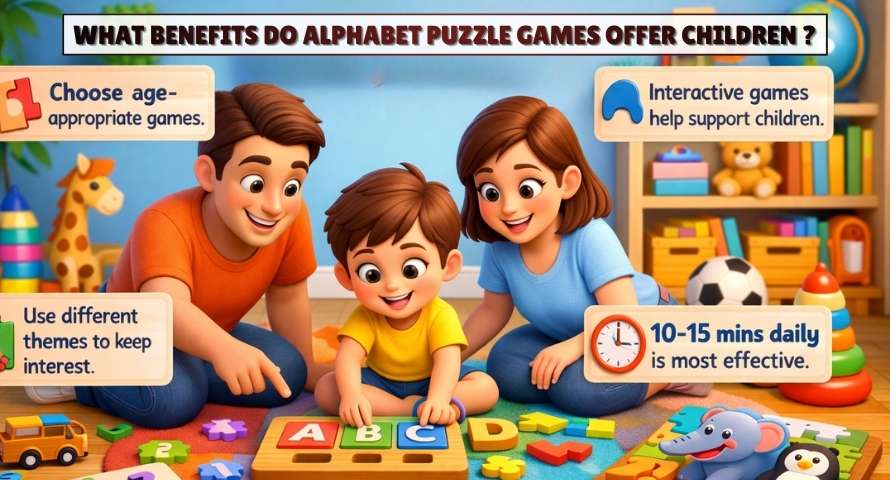
1. Choose games age-appropriate, starting with more difficult puzzles for older children.
2. Interactive games help support children.
3. Use puzzles with different themes to maintain interest.
4. Daily 10-15 minute sessions are more effective than shorter sessions with children.