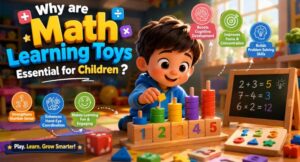
– During their early years, children develop their cognitive and comprehension skills.
– Math toys foster learning by helping children grasp mathematical concepts through hands-on, real-world experiences.
– Instead of merely rote-memorizing numbers from textbooks, children can touch, manipulate, and interact with objects while learning through play.
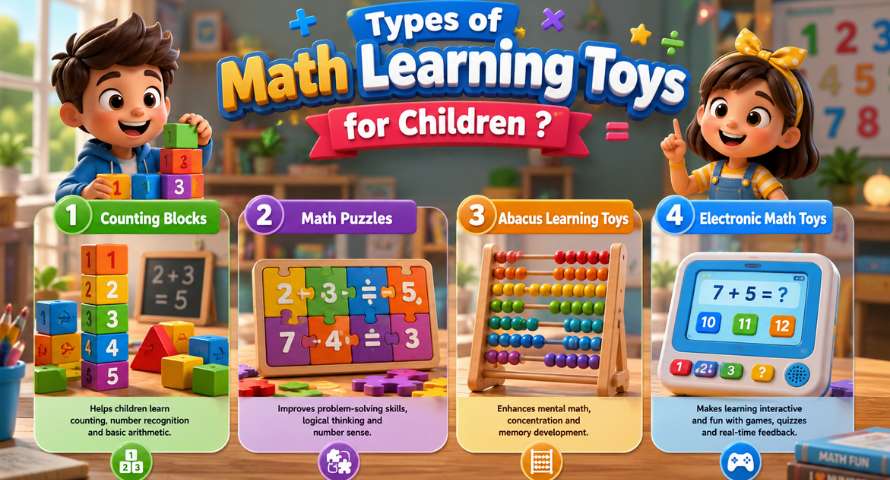
2) Types of Math Learning Toys for Children?
– A wide variety of educational math toys are available for children of all ages. Choosing the right toy appropriate for a child’s specific age can make the learning process enjoyable and engaging.
# 1. Counting Blocks
– Blocks are excellent tools for toddlers and preschoolers.
– Children learn by stacking colorful blocks on top of one another and by sorting them into groups.
– They can also begin to learn the basics of addition and subtraction.
# 2. Math Puzzles
– These toys are designed to enhance logical thinking skills.
– Toys involving number matching and shape puzzles encourage children to think critically while having fun.
# 3. Abacus Learning Toys
– The abacus is a classic educational tool for teaching mathematics to children. It teaches counting, addition, subtraction, and number sequencing.
# 4. Electronic Math Toys
– These electronic devices often incorporate audio elements to keep children highly engaged.
– They typically feature counting games and interactive activities that enhance learning through entertainment.

3) How to Choose the Right Math Toys for Children?
– When selecting math learning toys for children, parents should carefully consider the child’s age and developmental stage.
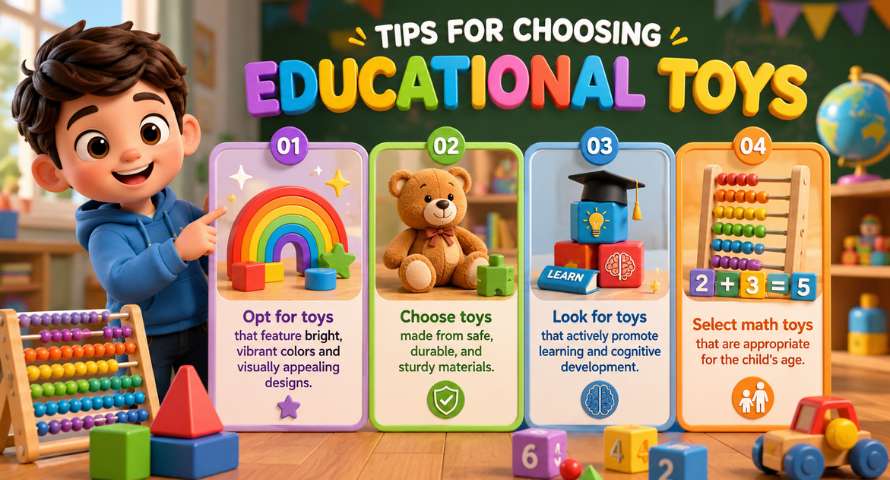
# Tips for Choosing Educational Toys
– Opt for toys that feature bright, vibrant colors and visually appealing designs.
– Choose toys made from safe, durable, and sturdy materials.
– Look for toys that actively promote learning and cognitive development. – Select math toys that are appropriate for the child’s age.
4) What benefits do children derive from learning through play?
– Educational toys are essential for young children; specifically, children learn mathematical concepts most effectively when they actively engage with and use math-related toys.
– It fosters the development of the child’s brain.